
Setting up or upgrading an office is not simply about buying desks and chairs. The furniture you choose has to work with your space, your employees, your workflow, and your future growth.
This is where modular office furniture becomes valuable.
Unlike conventional fixed furniture, modular furniture is designed around flexibility. Workstations can be rearranged, additional units can be added, storage can be integrated, and layouts can evolve as the business changes.
For a growing company, this flexibility can make a significant difference in both workspace efficiency and long-term costs.
In this complete guide, we’ll cover everything businesses should know before investing in modular office furniture, including types, benefits, materials, layouts, cost factors, buying mistakes, and how to choose the right supplier.
What Is Modular Office Furniture?
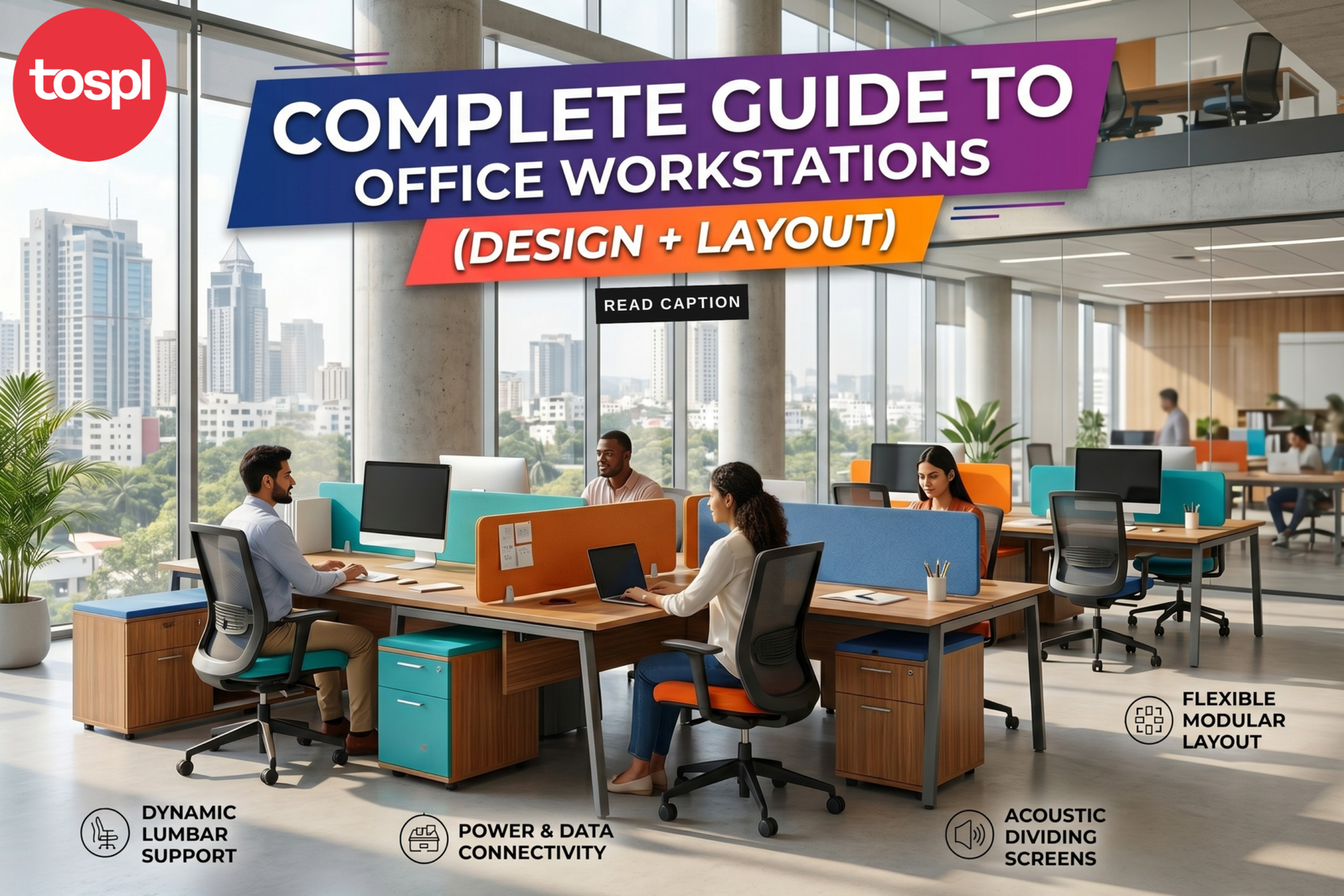
Modular office furniture consists of individual components that can be combined, separated, rearranged, or expanded according to the requirements of a workspace.
A modular workstation, for example, can be designed for two employees today and expanded into a larger configuration as the team grows.
A typical modular office setup may include:
- Modular workstations
- Office desks
- Partition panels
- Pedestals
- Storage units
- Cable management systems
- Manager workstations
- Meeting tables
- Collaborative work areas
The key difference is flexibility.
Instead of treating furniture as a permanent installation, modular furniture allows businesses to adapt their workspace without completely rebuilding it.
Why Are Businesses Choosing Modular Office Furniture?
Businesses rarely remain the same for long.
Teams expand. Departments move. Working styles change. Companies adopt hybrid work models. Offices are relocated or redesigned.
A fixed furniture setup can make these changes expensive.
Modular furniture provides the flexibility to adapt.
1. Better Space Utilisation
One of the biggest advantages of modular office furniture is its ability to make better use of available space.
Instead of placing large independent desks throughout an office, modular workstations can be configured according to the actual dimensions and requirements of the space.
This can create:
- More usable workspace
- Better employee movement
- Improved collaboration
- More organised layouts
Good office planning isn’t about fitting the maximum number of desks into a room. It’s about finding the right balance between capacity and comfort.
2. Easy to Reconfigure
A company’s workspace requirements can change within a few months.
A team of 20 employees may become a team of 40.
A department may move to another floor.
A new project team may require a collaborative area.
With modular furniture, these changes can often be accommodated by rearranging or adding components rather than replacing the entire setup.
3. Supports Business Growth
One of the biggest mistakes businesses make while setting up offices is planning only for their current employee count.
If you expect your team to grow, your furniture should be capable of growing with it.
For example, a modular workstation configuration can start with a smaller number of seats and later be expanded by adding compatible units.
This makes modular furniture particularly useful for startups, growing companies, and businesses undergoing expansion.
4. Better Cable Management
Modern offices have a large number of electrical and technology requirements.
Computers, monitors, charging systems, networking equipment and other devices all require cables.
Poor cable management can make an otherwise well-designed office look cluttered.
Many modular workstation systems include:
- Cable trays
- Wire managers
- Power management
- Data routing
- Integrated electrical access
This creates a cleaner and more organised workspace.
Types of Modular Office Furniture
Modular office furniture isn’t limited to one type of workstation.
Different businesses require different configurations.
1. Linear Workstations
Linear workstations are arranged in a straight configuration.
They are suitable for teams that require individual workspaces while maintaining an open-office environment.
They work particularly well in:
- IT offices
- Back-office operations
- Call centres
- Administrative departments
2. Back-to-Back Workstations
Two workstations share a common central partition or structure.
This configuration can make efficient use of floor space while maintaining defined work areas.
It is commonly used in corporate offices where multiple employees work in the same department.
3. Cluster Workstations
Cluster workstations group multiple employees into a shared configuration.
Depending on the design, clusters can accommodate four, six, eight or more employees.
They are useful for teams that collaborate frequently.
4. Cubicle Workstations
Cubicles use partition panels to provide employees with greater visual separation and some degree of privacy.
They can be useful for:
- Finance teams
- HR departments
- Customer service teams
- Employees handling confidential information
5. Manager Workstations
Managers often require a combination of individual workspace and space for short discussions.
Manager workstations can include:
- Main work desk
- Side storage
- Pedestal
- Visitor seating
- Integrated storage
How to Choose the Right Modular Office Furniture
Buying modular furniture should begin with your workspace requirements, not a catalogue.
Here are the key factors businesses should consider.
1. Understand Your Employee Count
Start by identifying:
- Current employees
- Expected growth
- Department-wise requirements
- Seating requirements
- Management positions
Don’t design an office for today’s headcount if you already know significant growth is coming.
2. Measure Your Space
Before selecting furniture, understand the actual dimensions of the office.
Consider:
- Floor area
- Columns
- Doors
- Windows
- Electrical points
- Emergency exits
- Natural light
- Existing infrastructure
Furniture should work with the building rather than forcing the building around the furniture.
3. Consider How Teams Work
Different teams need different layouts.
An accounting department may require focused individual work.
A creative team may need more collaborative space.
A sales team may require larger shared work areas.
A management team may need more privacy.
Therefore, there is no universal office workstation layout that works for every business.
4. Think About Privacy
Open offices encourage communication, but not every task benefits from an entirely open environment.
Depending on your business, you may need:
- Privacy screens
- Acoustic panels
- Partitions
- Private cabins
- Meeting rooms
The goal is to create a workspace that balances collaboration and concentration.
What Materials Are Used in Modular Office Furniture?
The quality and durability of modular furniture depend heavily on the materials used.
Common materials include:
Particle Board
Cost-effective and commonly used in office furniture.
MDF
Offers a smoother surface and can be used for various office furniture applications.
Laminates
Used as surface finishes and available in different colours and textures.
Metal
Often used for frames, legs, storage systems and structural components.
Glass
Can be incorporated into partitions and executive furniture for a more contemporary appearance.
The right combination depends on the intended usage, design, budget, and expected lifespan.
How Much Does Modular Office Furniture Cost?
There is no single price for modular office furniture.
The total cost depends on several factors:
- Number of workstations
- Workstation configuration
- Material specification
- Partition height
- Storage requirements
- Cable management
- Accessories
- Customisation
- Installation
- Brand
- Project location
For example, a simple workstation setup for a small office will have very different requirements from a large corporate project involving hundreds of employees.
Instead of choosing furniture solely on the lowest quotation, businesses should compare the complete value of the solution.
Modular Furniture vs Fixed Furniture
| Factor | Modular Furniture | Fixed Furniture |
|---|---|---|
| Flexibility | High | Low |
| Reconfiguration | Easier | Difficult |
| Expansion | Easier | Often requires new furniture |
| Space Planning | Highly adaptable | Less flexible |
| Cable Management | Usually integrated | Depends on design |
| Long-Term Adaptability | High | Limited |
For businesses that expect their workspace requirements to change, modular furniture can provide a significant advantage.
How to Plan a Modular Workstation Layout
A good workstation layout should consider more than the number of seats.
Step 1: Understand employee requirements
Determine how many people need dedicated workstations.
Step 2: Divide departments
Group teams based on their workflow and collaboration requirements.
Step 3: Identify circulation paths
Employees should be able to move comfortably without creating unnecessary congestion.
Step 4: Plan meeting and collaboration areas
Not every conversation needs to happen at an employee’s desk.
Step 5: Plan storage
Decide where documents, personal belongings and shared equipment will be stored.
Step 6: Plan electrical and data requirements
Power and network access should be integrated into the furniture and floor plan.
Step 7: Leave room for growth
If your business is expanding, don’t use every available square foot on day one.
Common Mistakes When Buying Modular Office Furniture
Choosing Based Only on Price
The cheapest quotation may not represent the lowest total cost over the life of the furniture.
Consider quality, durability, maintenance, installation and future adaptability.
Buying Before Planning the Layout
This is one of the most expensive mistakes.
Furniture should be selected after understanding the space and workflow.
Ignoring Employee Comfort
A workstation isn’t just a desk.
Employees spend hours working there. Desk height, chair ergonomics, monitor positioning, lighting and movement all matter.
Forgetting Cable Management
A modern office without proper cable management quickly becomes cluttered.
Plan electrical and data routing from the beginning.
Not Planning for Future Expansion
If your company is growing, consider how the furniture system can accommodate additional employees.
Choosing a Supplier Only on Price
The supplier’s role doesn’t end when the furniture leaves the warehouse.
Delivery, installation, project coordination and after-sales support can significantly influence the success of an office project.
Modular Furniture for Different Types of Businesses
Corporate Offices
Large companies often need scalable workstation systems that can accommodate different departments and changing teams.
Startups
Startups can benefit from flexible furniture because their employee count and office requirements may change quickly.
IT Companies
IT teams often require efficient workstation layouts, cable management and ergonomic seating.
Healthcare Organisations
Administrative areas in hospitals and healthcare facilities may require durable furniture and efficient space planning.
Educational Institutions
Administrative offices, faculty rooms and staff workspaces can benefit from modular furniture systems.
Manufacturing Companies
Corporate offices attached to manufacturing facilities often require practical, durable workstations and storage solutions.
Modular Office Furniture and Ergonomics
Furniture flexibility is important, but employee comfort should not be overlooked.
A modular workstation should ideally be paired with an ergonomic office chair and an appropriate desk setup.
Consider:
- Appropriate desk height
- Comfortable seating
- Monitor positioning
- Adequate legroom
- Proper lighting
- Easy access to frequently used items
A flexible workspace that is uncomfortable isn’t a successful workspace.
Why Professional Space Planning Matters
Two offices with exactly the same floor area can have completely different levels of functionality.
The difference often comes down to planning.
A professional workspace planning process considers:
- Employee count
- Department requirements
- Furniture dimensions
- Circulation
- Storage
- Lighting
- Electrical infrastructure
- Collaboration areas
- Future expansion
This is why businesses should involve an experienced office furniture and workspace solutions partner early in the project rather than after furniture has already been selected.
How to Choose a Modular Office Furniture Supplier
Before finalising a supplier, ask:
Do they understand commercial projects?
Corporate projects require different levels of planning and execution than individual furniture purchases.
Can they provide installation?
Professional installation is important for large-scale projects.
Can they handle bulk orders?
Ask about their ability to execute projects involving dozens or hundreds of workstations.
Do they offer customisation?
Your office may require a specific configuration or combination of products.
Can they support future expansion?
A modular furniture system should ideally be scalable.
Do they have project experience?
Ask to see completed office projects and client references.
Why Choose Tirupati Office Systems?
At Tirupati Office Systems (TOSPL), we don’t look at modular office furniture as simply a collection of desks and partitions.
We look at the larger workspace.
For more than 22 years, we have helped businesses and institutions plan and furnish functional work environments.
Our solutions include:
- Modular Office Workstations
- Ergonomic Office Chairs
- Executive Furniture
- Conference Room Furniture
- Reception Furniture
- Storage Solutions
- Carpet Tiles & Commercial Flooring
- Audio Visual Solutions
- Turnkey Office Interiors
From understanding your requirements to planning, product selection, delivery and installation, our team helps businesses create workspaces designed around the way their people actually work.
We also work with leading brands and product partners to provide businesses with suitable solutions across different requirements and budgets.
Frequently Asked Questions
Is modular office furniture suitable for small offices?
Yes. Modular furniture can be particularly useful in smaller offices because layouts can be planned around the available space and reconfigured when requirements change.
Is modular furniture durable?
The durability depends on the materials, construction quality, hardware and intended usage. For commercial offices, choose furniture designed specifically for regular workplace use.
Can modular workstations be customised?
Many modular systems can be customised in terms of configuration, dimensions, partitions, storage and accessories, depending on the system.
Can modular furniture be expanded later?
Yes. One of the major advantages of modular furniture is its ability to accommodate additional units and configuration changes.
How many employees can one workstation cluster accommodate?
Workstation clusters can be designed for different team sizes, including two, four, six, eight or more employees depending on the available space and requirements.
Is modular furniture more expensive than traditional furniture?
The initial cost can vary depending on specifications. However, businesses should evaluate the total value, including flexibility, durability, expansion and reconfiguration.
Do office furniture suppliers provide installation?
Many professional office furniture suppliers provide installation as part of their commercial project services. Always confirm installation and after-sales support before finalising a supplier.
Final Thoughts
Choosing modular office furniture isn’t simply about selecting desks that look good.
It’s about creating a workspace that can support your people today and adapt to your business tomorrow.
The right solution should make efficient use of space, support employee comfort, simplify technology integration, and give your business the flexibility to change as it grows.
Before making a purchase, take time to understand your requirements, plan the layout, compare materials and evaluate suppliers based on more than price.
Because good office furniture should not just fill a room.
It should help the room work better.
Build a Workspace That Grows With Your Business
Planning a new office, expanding your existing workspace, or replacing outdated furniture?
Tirupati Office Systems can help you plan the right modular furniture solution based on your space, team size, workflow and future requirements.
From modular workstations and ergonomic chairs to flooring and turnkey office solutions, our team can support your project from planning through installation.
Talk to our workspace experts today.
Share this :

Latest Article
Keep reading
Related Article
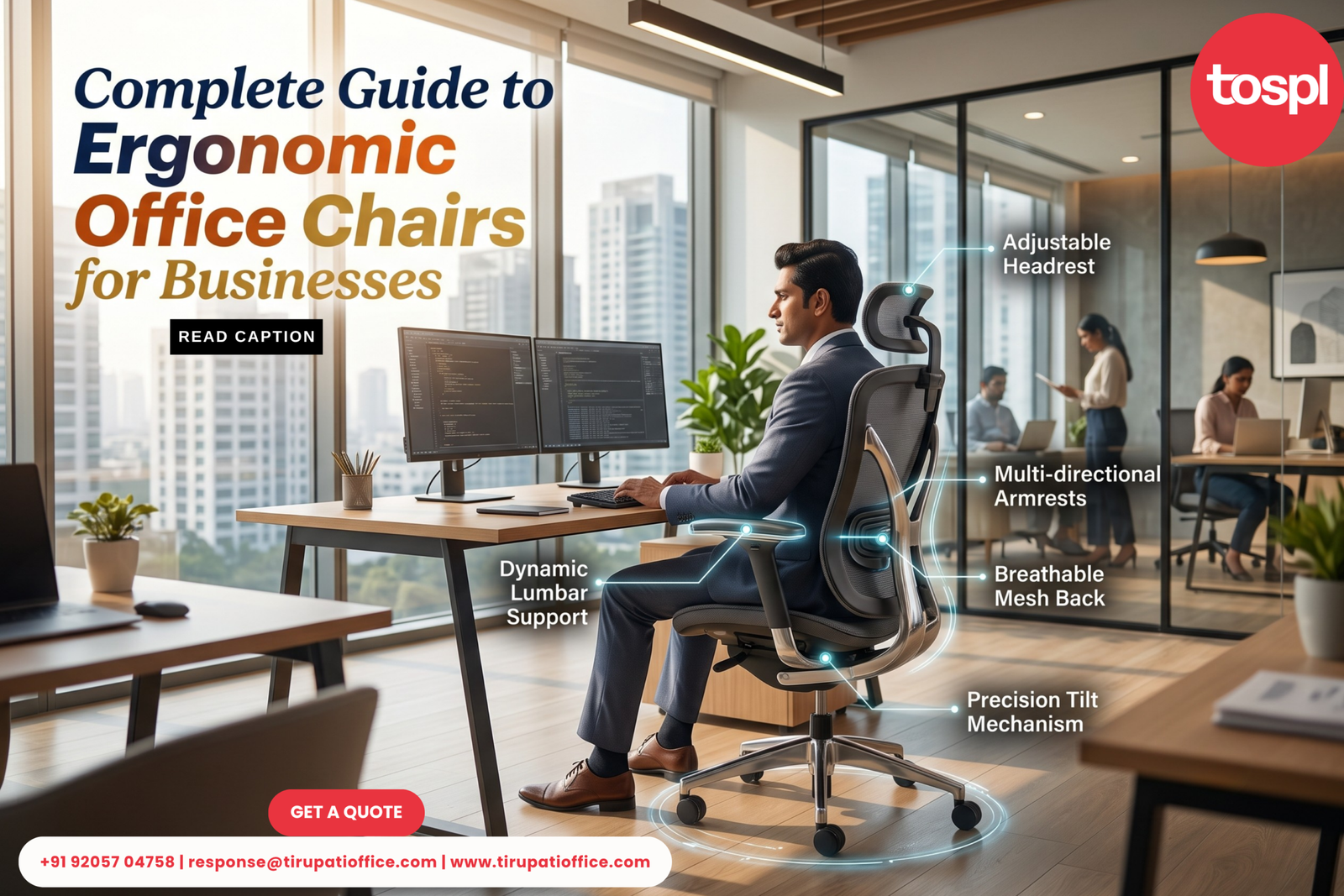
Complete Guide to Ergonomic Office Chairs for Businesses An office chair is easy to underestimate. For a business, however, choosing the right office chair isn’t
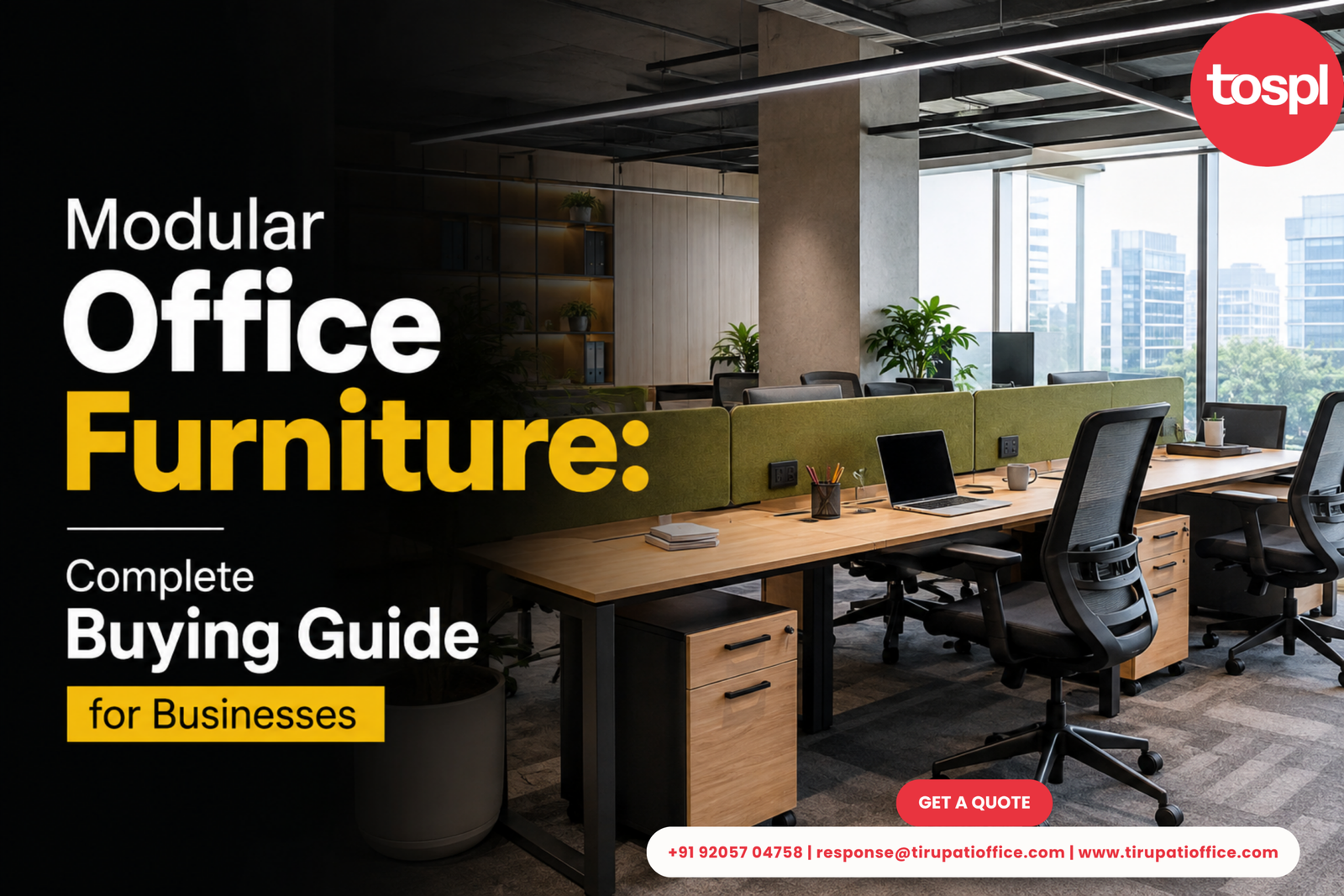
Modular Office Furniture: Complete Buying Guide for Businesses Setting up or upgrading an office is not simply about buying desks and chairs. The furniture you