Office flooring is often overlooked during workspace planning.
Most businesses focus on furniture, layout, and design but the flooring beneath plays an equally important role.
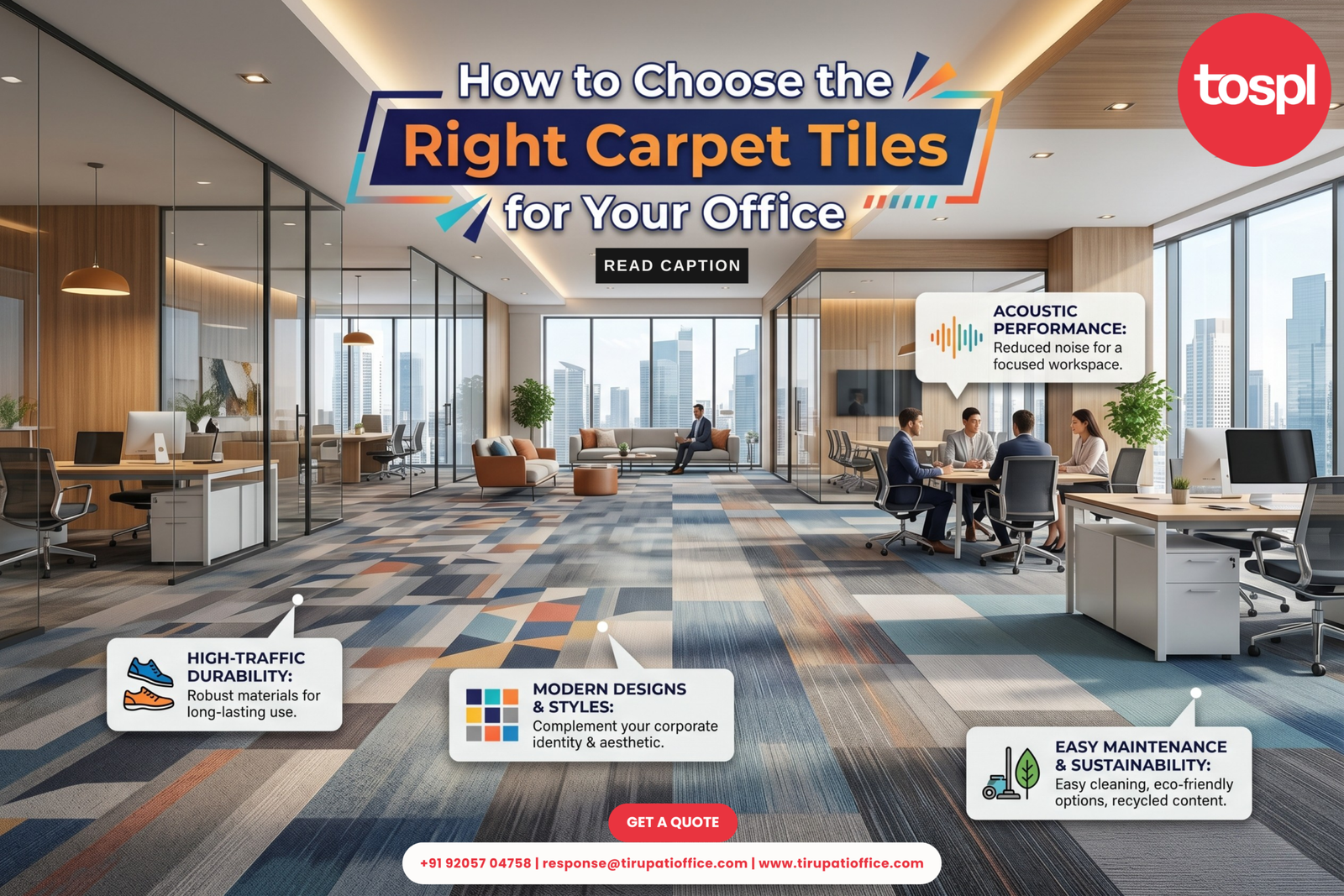
Carpet tiles have become one of the most preferred choices for modern offices due to their durability, flexibility, and aesthetics.
But choosing the right carpet tiles is not as simple as selecting a color or pattern. It requires a clear understanding of usage, traffic, maintenance, and long-term performance.
Guide to Choose the right Carpet Tiles
1. Understand Your Office Requirements First
Before selecting carpet tiles, start with clarity:
- What type of office is it? (Corporate, IT, co-working, etc.)
- How many people will use the space?
- Which areas will have the highest foot traffic?
For example:
Reception areas and corridors experience more wear compared to meeting rooms or cabins.
Choosing the same carpet tiles for all areas is a common mistake.
2. Consider Foot Traffic and Durability
Not all carpet tiles are designed for the same level of usage.
For high-traffic areas, choose tiles that are:
- Dense and tightly constructed
- Stain-resistant
- Durable for long-term use
For low-traffic areas, you can explore more design-focused options.
Tip: Always ask for commercial-grade carpet tiles for offices.
3. Choose the Right Tile Type (Tiles vs Planks)
Carpet flooring comes in two main formats:
Carpet Tiles
- Square shape
- Easy to install and replace
- Suitable for structured layouts
Carpet Planks
- Rectangular format
- Modern and dynamic look
- Ideal for creative layouts
Planks are trending in modern offices for a more premium feel.
4. Focus on Design, Not Just Color
Carpet tiles are not just about aesthetics, they influence how your office feels.
Consider:
- Neutral tones for professional environments
- Patterned tiles to hide stains and wear
- Zoning with different colors (workstations vs meeting areas)
A well-planned design can enhance the entire workspace.
5. Prioritize Maintenance and Replacement
One of the biggest advantages of carpet tiles is easy maintenance.
Unlike traditional carpets:
- Individual tiles can be replaced
- Cleaning is simpler
- No need to redo the entire flooring
This makes carpet tiles cost-effective in the long run.
6. Check Acoustic Benefits
Carpet tiles help reduce noise levels in offices.
This is especially useful for:
- Open office layouts
- Call centers
- Meeting areas
Better acoustics = better concentration and communication.
7. Evaluate Quality and Brand
Always choose trusted brands for carpet tiles.
High-quality brands offer:
- Better durability
- Consistent design
- Warranty support
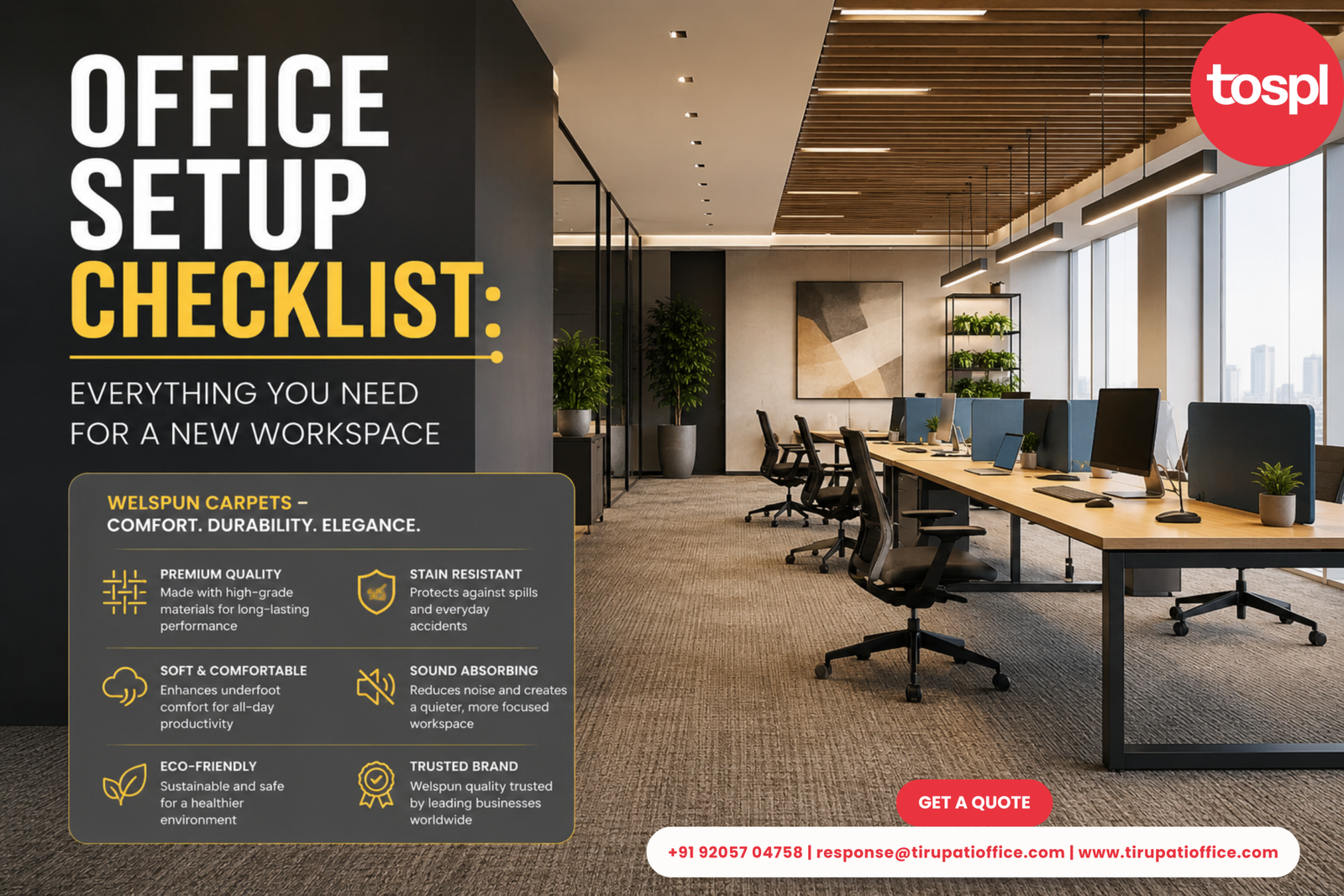
For example, brands like Welspun provide commercial-grade carpet tiles designed for office environments.
8. Plan Installation and Execution Properly
Even the best carpet tiles can fail if installation is poor.
Ensure:
- Proper surface preparation
- Professional installation
- Accurate measurements
Smooth execution is key to long-term performance.
9. Think Long-Term, Not Just Budget
Many businesses try to save costs by choosing cheaper flooring options.
But in reality:
- Low-quality tiles wear out faster
- Replacement costs increase
- Maintenance becomes frequent
Investing in the right carpet tiles once saves money over time.
Conclusion
Choosing the right carpet tiles is not just about flooring.
It is about creating a comfortable, functional, and durable workspace.
When selected thoughtfully, carpet tiles enhance productivity, improve aesthetics, and reduce long-term costs.
Take the time to evaluate your requirements, choose quality products, and work with experienced professionals for the best results.
Planning to upgrade your office flooring?
At Tirupati Office Systems, we provide high-quality carpet tiles and flooring solutions, including trusted brands like Welspun, with pan-India delivery and professional installation.
Get in touch with our team today for expert guidance.